
Unearthing the Fragile Ghosts of Modern Sound
Before recorded music became an endlessly replicated commodity, countless traditions lived in vulnerable forms: a melody carried by memory, a work song learned on a plantation, a ballad altered from one porch to the next, a ritual sound understood only within its community. During the twentieth century, industrialization, migration, radio, and commercial recording placed those traditions under extraordinary pressure. Mass media expanded access to music, but it also favored standardized arrangements, marketable performers, and repertories that could be distributed at scale. What disappeared was not simply a collection of songs. It was an entire ecology of local voices, accents, performance practices, instruments, and social meanings.
Field recording emerged as a radical form of cultural archaeology. Its practitioners did not merely place sound behind glass like an artifact in a museum. They entered homes, prisons, churches, work sites, villages, and streets, carrying heavy equipment into environments that commercial recording companies had largely ignored. The results were shaped by technical limitations, personal judgment, and unequal power, but they also preserved performances that might otherwise have vanished from the historical record. From Alan Lomax”s mobile disc-cutting rigs to Harry Smith”s obsessive 78 RPM collection, preservation became an act of selection and interpretation. The archive was never neutral. It was built by listeners who traded comfortable studios for backroads, trunk-sized machines, and the unpredictable acoustics of lived experience.
Heavy Machines and Dusty Backroads with Alan Lomax
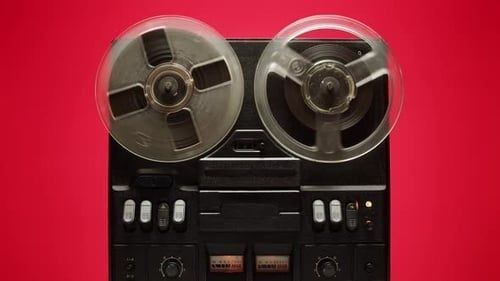
Early mobile recording was an engineering expedition as much as a musical one. In the 1930s and 1940s, field recordists often worked with hundreds of pounds of equipment, including microphones, amplifiers, power supplies, cables, and disc-cutting machinery capable of engraving sound directly onto acetate or instantaneous discs. The apparatus had to be transported by car, protected from heat and dust, and positioned close enough to performers to overcome environmental noise. There was no convenient multitrack safety net, no portable solid-state recorder, and no easy way to repair a damaged take. A missed performance or worn cutting stylus could mean the permanent loss of a unique document.
Alan Lomax approached this difficult work with an unyielding sense of purpose. Across the American South, he recorded singers in rural homes, churches, prisons, and community spaces, seeking voices absent from commercial charts and metropolitan concert halls. The settings mattered. A prison work song carried a different social charge from a studio arrangement of the same melody. A gospel performance shaped by a congregation revealed forms of collective timing and response that a polished single could easily flatten. Lomax”s recordings captured not only repertoire but also vocal grain, regional phrasing, room ambience, and the relationship between performer and listener.
That commitment left a permanent imprint on institutional memory. Raw gospel, blues, balladry, spirituals, and work songs entered archives where later musicians, scholars, broadcasters, and listeners could encounter them. The scale of the achievement becomes clearer through the Library of Congress archival holdings, which document the significance of this historic fieldwork and its place in the national record. Yet Lomax”s legacy is not limited to the number of discs preserved. It also lies in the insistence that vernacular performance deserved serious attention, even when it lacked commercial polish or cultural prestige.
- Technical ambition: Mobile recording required robust machines, careful power management, and physical access to places far beyond the studio.
- Social reach: The work centered performers whose music was routinely excluded from mainstream publishing and record distribution.
- Archival consequence: Performances once tied to a particular room or community became available to future researchers, artists, and descendants.
Harry Smith and the Alchemy of the Folkways Anthology
Harry Smith worked from a different position. He was not primarily a traveler with a microphone but an obsessive collector of 78 RPM records, an experimental filmmaker, visual artist, occultist, and restless cataloguer of American sound. His method was intensely personal. He listened across record-company categories, accumulated obscure pressings, and treated commercial discs as fragments of a larger cultural mythology. The records were already mediated objects, made for sale in the 1920s and 1930s, but Smith reassembled them into a new argument about the country that had produced them.
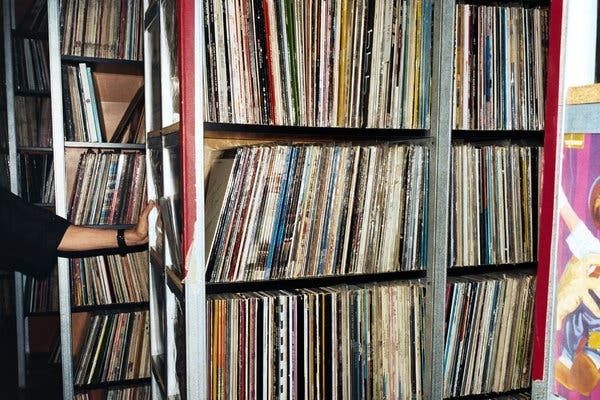
That argument took definitive form in the 1952 Anthology of American Folk Music, assembled by Smith with Folkways founder Moses Asch. The initial release brought together 84 recordings made between 1927 and 1932, drawing from blues, hillbilly music, gospel, ballads, novelty songs, and other traditions. Smith organized the material according to an alchemical and symbolic scheme, while also designing the striking packaging, artwork, and liner notes. The presentation made the anthology feel less like a reference set than a mysterious object from an alternate history of the United States.
Its most disruptive gesture was the removal, or at least the blurring, of the original racial and regional commercial labels. The records had been marketed through categories such as “race” and “hillbilly,” terms that reflected the segregation and sales logic of the period. Smith”s sequence placed these recordings into conversation, allowing a rural string-band performance, a blues lament, and a sacred number to share a symbolic landscape. This did not erase the historical conditions behind the records, but it forged a different listening map. The Anthology proposed that American identity could be heard through underclass, dispossessed, marginalized, and otherwise neglected voices.
Its influence on the 1960s folk revival was immense, even if it should not be treated as the movement”s single cause. Bob Dylan”s later performances demonstrate how anthology material entered the folk process, where inherited songs are altered, recombined, and made newly relevant. Dylan drew on several Anthology selections, sometimes through direct interpretation and sometimes through changed lyrics, borrowed melodies, or transformed narrative structures. The important point is not simple imitation. The anthology helped make old recordings available as active materials, turning catalog history into a working vocabulary for new artists.
Comparing Archival Curators Across the Decades
Lomax, Smith, and contemporary experimental recordists such as KMRU represent distinct approaches to preservation and transformation. Lomax pursued encounter, carrying equipment into social environments and recording performance in context. Smith pursued recombination, extracting existing commercial recordings from their original categories and building a new sequence. KMRU treats field recording as an ongoing practice of situated listening, using sound as a collage of cities, people, environments, histories, and silences rather than as a transparent copy of reality.
| Curator | Method | Medium and gear | Central ethical question | Long-term impact |
|---|---|---|---|---|
| Alan Lomax | Direct field documentation | Large mobile disc-cutting systems and microphones | Whose voices receive institutional recognition? | Preserved vernacular performance and expanded the cultural archive |
| Harry Smith | Archival collage and symbolic sequencing | Obsessive 78 RPM collecting, editing, design, and annotation | How can inherited categories be rearranged? | Reframed American roots music for the folk revival |
| KMRU | Reflective, contemporary sound collage | Portable digital recording and electronic processing | How can listening acknowledge place, power, and cultural difference? | Connects field sound with decolonial, environmental, and experimental practice |
The contrast in gear is more than a historical curiosity. Lomax”s machinery made the recorder a visible participant in the encounter. Smith”s equipment was effectively a library, and his cuts occurred through selection, ordering, and framing. KMRU”s portable digital practice reduces the physical footprint but does not remove responsibility. His work emphasizes that listening is never neutral. A recording made in Nairobi, Berlin, or another unfamiliar place carries the position of the person holding the microphone, as well as the histories embedded in the sounds being gathered.
The Ethics of Cultural Capture and Modern Repatriation
Every archive reflects a relationship of power. Field recordists often arrived with institutional backing, technical authority, and access to publication or broadcast networks, while performers contributed knowledge and labor without receiving equivalent control over the resulting collection. Consent could be partial or poorly explained. Recordings might be removed from their original social setting and interpreted through academic, colonial, or commercial frameworks. Even sympathetic preservation could therefore become a form of cultural capture, particularly when communities lost authority over how their own songs and voices were circulated.
Modern repatriation efforts seek to change that structure rather than simply digitize it. The Association for Cultural Equity places “return” at the center of its work, supporting advance fieldwork, identifying local partners, and involving communities in repatriation, curation, circulation, and use. Its work with the John A. and Alan Lomax collections includes preservation, restoration, digitization, and distribution through platforms such as the Lomax Digital Archive and Global Jukebox. The larger principle is clear: access should not be confused with ownership, and online availability is not the same as cultural participation.
The strongest contemporary projects move beyond the idea that archives are finished containers. They ask how old recordings can be heard again, by whom, and under what conditions. In this context, Noel Lobley”s award-winning study, Sound Fragments and its African electronic stories, offers an important model for thinking about colonial sound archives. The book examines collections associated with the International Library of African Music at Rhodes University and follows how local artists in post-apartheid South Africa creatively decolonize, repurpose, and reimagine inherited recordings.
- Shared authority: Communities should help determine access, interpretation, circulation, and acceptable forms of reuse.
- Contextual listening: Recordings need social, linguistic, historical, and environmental context rather than being treated as neutral sound objects.
- Creative return: Repatriation can include performances, residencies, education, new recordings, and artistic responses led by originating communities.
- Ongoing responsibility: Digitization is a beginning, not an ethical endpoint.
KMRU”s practice offers a related artistic vocabulary. His collages and projects such as “Temporarily Stored” reflect hesitation around archival material connected to colonial violence, while collaborative works including “Oceanic Refractions” open space for questions of indigenous self-determination, care, and climate crisis. The goal is not to impose one definitive interpretation on a recording. It is to create conditions in which sound can remain complex, contested, and alive.
Why Imperfect Archives Continue to Fuel Sonic Tomorrow
The influence of these preservationists still runs through contemporary music. A chain connects rural front porches to the 1960s folk explosion, from there to reissues, sample libraries, hip-hop production, ambient collage, experimental electronics, and the renewed culture of archival vinyl. Each generation reopens the catalog and discovers different possibilities. A field recording may become a melodic quotation, a rhythmic texture, a lesson in phrasing, or a reminder that performance is inseparable from place.
Imperfection is part of the attraction. Crackle, hiss, room noise, distortion, uneven microphone distance, and the grain of shellac can restore a sense of human scale that hyper-quantized audio often suppresses. These sounds are not automatically authentic, and nostalgia should not replace historical understanding. But they can make the act of listening more attentive. The surface noise becomes evidence of transmission, while the voice beneath it remains a living performance rather than a flawless studio product.
The lasting lesson is a manifesto for deep, contextual listening. Hear the singer, but also hear the room. Notice the collector”s framing, the label”s categories, the archive”s omissions, and the community”s right to speak back. Preservation matters most when it supports renewed agency rather than simply extending institutional possession. For collectors, audio engineers, and modern listeners, the richest archive is not the one that freezes the past. It is the one that allows old sounds to be understood, challenged, returned, and transformed with care.