
When the Room Plays Back
A legendary recording space is never merely a container around a performance. Its dimensions, surfaces, air volume, and hidden structural vibrations become part of the arrangement, often influencing decisions before a microphone is switched on. A vocal delivered beneath a vaulted ceiling carries a different emotional weight from the same vocal recorded against treated studio walls. A snare struck in a concrete stairwell acquires a tail, density, and sense of scale that no isolated close microphone can fully explain. In the strongest records, the room behaves like a co-composer, contributing timing, color, contrast, and a physical response that performers learn to play against.
That response is especially valuable in an era of immaculate in-the-box production. Digital reverbs can be precise, recallable, and extraordinarily convincing, but physical architecture remains tactile and unpredictable. A stone wall returns some frequencies more aggressively than others. A metal surface produces reflections that shift as the source moves. A large room changes character when filled with bodies, equipment, heat, and volume. Across the history of recorded music, raw sound has repeatedly met stone, concrete, timber, steel, and industrial geometry, leaving behind acoustic signatures that remain audible long after the original session has ended.
The Science of Spatial Imprints and Archaeoacoustics
Every room shapes a sound through a network of direct arrival, early reflections, diffuse reverberation, and structural resonance. The first reflections help define apparent size and proximity, while later energy establishes the decay that listeners interpret as atmosphere. Uneven surfaces scatter sound rather than returning it as a single clean echo. Porous materials absorb selected frequencies, rigid boundaries reinforce others, and the building itself may vibrate sympathetically when exposed to sustained low-frequency energy. The resulting fingerprint is not simply a reverb time. It is a changing relationship between frequency, position, amplitude, and time.
This is why two spaces with apparently similar dimensions can produce radically different records. A chapel may offer a long, blended sustain that flatters legato vocals and slow harmonic movement. An industrial hall may generate sharper reflections, metallic density, and uneven bass behavior. The source, microphone position, audience or musicians present, and performance level all alter the result. A drummer who plays softly may excite only the room’s upper and middle reflections, while a full-volume ensemble can activate doors, floors, railings, and distant structural elements.
Long before multitrack recording, builders and performers were testing how architecture could organize sound. Ancient Greek and Roman amphitheaters used geometry to support speech and musical projection, while prehistoric chambers and caves may have concentrated attention around resonant zones. The modern study of these relationships belongs to archaeoacoustic research, which examines how past societies interacted with sound in built and natural environments. The discipline does not reduce a ritual chamber to an early recording studio, but it does reveal a consistent human interest in locating, amplifying, and assigning meaning to unusual auditory behavior.
- Structural resonance adds vibration from floors, walls, ceilings, and fixtures.
- Boundary reflections determine clarity, stereo impression, and perceived distance.
- Surface irregularity diffuses energy and prevents a decay from sounding uniformly smooth.
- Performance level changes which parts of the building are acoustically activated.
Echoes in the Vaults and Industrial Caverns
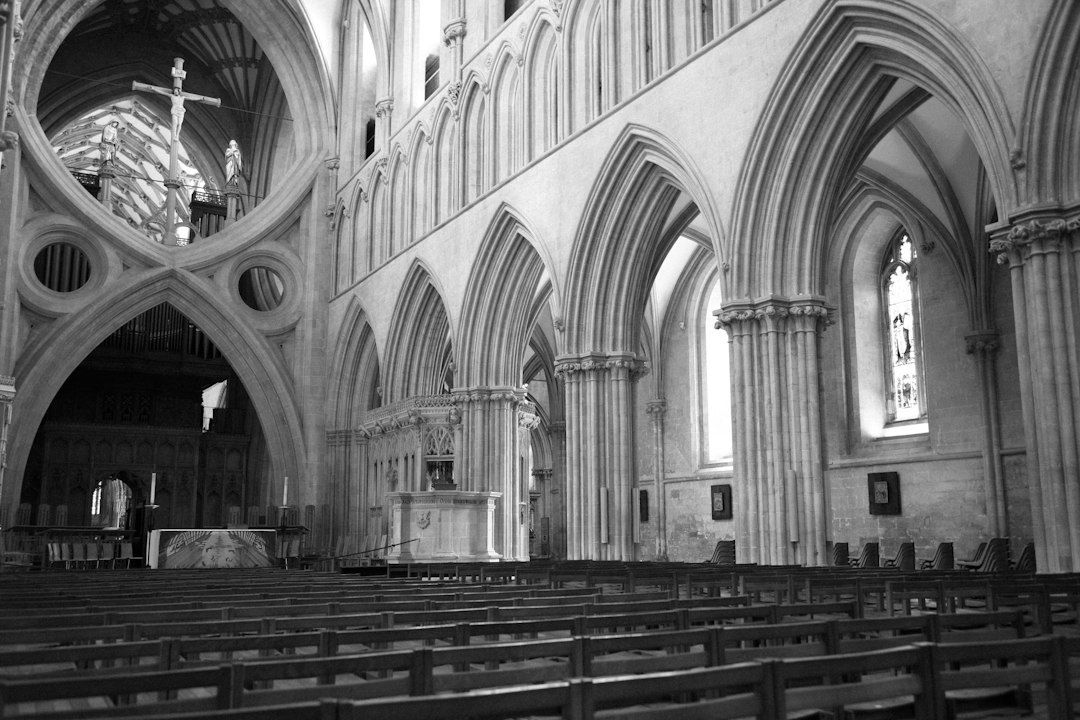
Sacred spaces were among the most influential early delay chambers because their proportions were designed around collective voice, ritual movement, and intelligibility. Stone chapels and cathedrals can produce an enveloping sustain that makes a single voice appear communal, even monumental. The effect is beautiful, but it is not neutral. Long reverberation can blur fast consonants, soften rhythmic subdivisions, and impose a practical tempo on a performance. A vocal arrangement built for a dry control room may become unusable in a cathedral, while slow drones, choral textures, pipe organ, and sustained strings can seem to find their natural architecture there.
Converted sacred buildings preserve that history while introducing new production possibilities. Their high ceilings and hard surfaces provide scale, yet their irregular alcoves, galleries, columns, and furnishings break the decay into layers. Engineers can exploit that complexity by placing a source near one reflective boundary and an ambient pair much farther away, creating both definition and depth. The result is not simply “cathedral reverb.” It is a record of where the performer stood, where the microphones listened, and how the building returned the performance.
The industrial counterpart is more severe. Kraftwerk Berlin, a former power plant, demonstrates how an abandoned or repurposed industrial environment can function as a cultural and acoustic vessel. Its use for multisensory artistic work, including a 2025 LAS Art Foundation commission by Laure Prouvost, reflects the continuing attraction of spaces where technological history remains embedded in the walls. Power stations and similar facilities often combine concrete mass, steel surfaces, vast vertical volume, and hard parallel boundaries. These features can create sub-bass bloom, forceful early reflections, and a brutalist decay that feels less blended than a cathedral’s reverberance.

| Space type | Typical acoustic character | Production opportunities |
|---|---|---|
| Stone chapel | Long, blended sustain with strong vocal and harmonic bloom | Choral layers, slow vocals, drones, strings |
| Cathedral | Large-scale reverberation with softened articulation | Monumental arrangements and spacious vocal performance |
| Industrial power plant | Metallic reflections, uneven decay, powerful low-frequency behavior | Electronic textures, drums, sub-bass, experimental ensembles |
| Concrete stairwell | Shorter, more directional reflections with strong density | Percussion, guitar accents, transitional effects |
Capturing the Room with Surgical Ambient Mic Strategies
The most effective location recordings usually begin by rejecting the false choice between close-miked precision and distant ambience. A close microphone preserves articulation, transient detail, and mix control. Ambient microphones capture the architecture’s response, including the glue that makes separate sources feel as though they occupied the same physical event. Stairwells, reflective hallways, galleries, and tall ceilings can supply depth without requiring an artificial effect to be added later.
Placement should be treated as a compositional decision rather than a technical afterthought. A distant stereo pair may reveal the room’s width, while a boundary-facing microphone can emphasize a particular reflection. A pair positioned near the edges of a stage can capture both the performance and the audience-facing response, an approach discussed in these Tips for Ambient Stage Mic”ing. The principle extends beyond live monitoring: ambient microphones should tell the listener where the musicians are and how the room surrounds them, not merely add an anonymous wash.
High-volume sessions demand methodical control. Phase cancellation can occur when direct and ambient signals arrive with incompatible timing, producing a hollow or unstable image. Engineers should audition the room pair in mono, compare polarity, measure or listen for arrival differences, and move microphones in small increments. Excessive low-frequency decay can overwhelm the close signal, particularly in concrete spaces, so high-pass filtering or careful microphone height may be necessary. The goal is not to remove the building’s identity, but to keep its most compelling behavior from masking the performance.
- Scout the space at performance level, because a room that sounds balanced during conversation may become bass-heavy or aggressive at tracking volume.
- Record several ambient positions, including wide, narrow, high, and boundary-oriented options before committing to a single perspective.
- Check mono compatibility and listen for comb filtering between close and distant microphones.
- Capture meaningful silence, since the room tone between takes helps preserve continuity during editing.
- Keep the room pair available throughout the session, allowing arrangement and dynamics to interact with the architecture.
Why Algorithmic Convolution Still Chases Physical Air
Convolution reverb works by combining an input signal with an impulse response, a recorded or generated representation of how a space responds to a short excitation. In practical terms, the impulse response contains information about reflections and decay at a particular position, with a particular microphone arrangement, under particular conditions. The convolution engine applies that response to a dry sound, producing a result that can be impressively close to the captured environment. The development of convolution follows earlier approaches including physical echo chambers, spring units, plates, and later digital systems such as the Lexicon 224 and AMS RMX16.
Its strengths are substantial. Convolution offers repeatability, recall, stereo consistency, and access to rooms that would otherwise be unavailable. It can place a closely miked vocal inside a church, add a recognizable chamber to a snare, or provide a controlled sense of depth without sending an entire production into a location. Subtle reverb remains a practical way to prevent isolated tracks from sounding as though they exist in an anechoic chamber, while exaggerated settings can become a deliberate production effect rather than a simulation of realism.
Yet a static impulse response captures only a slice of physical reality. Real rooms change as sources move, musicians turn, doors open, bodies absorb energy, and air temperature shifts. Loud signals can excite structures in ways that quiet signals do not. Materials may resonate, rattle, distort, or interact with low frequencies beyond the behavior represented in a single measured response. Atmospheric absorption also varies with humidity and frequency. Even sophisticated systems that offer multiple impulses or modulation models are still approximating a room’s changing state.
- Convolution excels at stable spatial placement and repeatable mix decisions.
- Physical rooms respond differently to soft and loud performances.
- Architectural vibration can introduce pitch-adjacent resonance, rattles, and unpredictable density.
- Movement through a room changes early reflections and perceived source distance.
- The emotional impact of air moving around a performer is partly musical and partly psychological.
That last point explains why engineers continue to pursue unusual spaces even when a convincing plug-in is available. A physical room changes the way musicians phrase, sustain, attack, and leave silence. The performer hears the consequence immediately and adjusts to it, creating a feedback loop between architecture and interpretation. The final record therefore contains more than a reverb tail. It contains decisions made because the room answered back.
Preserving the Sonic Identity of Imperfect Structures
Historic spaces deserve to be treated as active instruments, not inconvenient shells waiting to be corrected. Their irregularities can expose weaknesses in an arrangement, but they can also reveal the performance’s most distinctive qualities. A vocal may discover unexpected sustain. A drum part may gain a natural counter-rhythm from reflections. A sparse guitar figure may acquire scale without being buried under an exaggerated plug-in. The producer’s task is to identify which behavior belongs to the music and which behavior merely competes with it.
That requires preparation, restraint, and a willingness to preserve evidence of place. Multiple microphone perspectives, disciplined gain staging, careful phase checks, and detailed documentation can make an unpredictable room workable without sterilizing it. Once committed to tape, a hard drive, or a final pressing, the acoustic footprint becomes part of the release’s identity. Physical architecture may be impossible to recall perfectly, but that limitation is precisely its value. The room contributes a singular event, and the best records let listeners feel that event long after the walls have fallen silent.