

When the Pulse Accelerates Before the Downbeat
Minutes before a recital, a festival set, or the opening chord of a tour show, the body can sound its own alarm. The pulse quickens, the hands feel charged, the breath becomes shallow, and attention narrows toward every possible mistake. This visceral tremor is not reserved for inexperienced students. A conservatoire pianist, an orchestral principal, a club headliner, and a music director carrying an entire ensemble can all encounter the same surge before the first downbeat.
For generations, stage fright was treated as evidence of weak character, insufficient preparation, or a medical defect that needed to be muted. That reading is too blunt for the complexity of live performance. Music performance anxiety is shaped by evaluation, personal standards, preparation, environment, motivation, and the meaning attached to the event. The contemporary view is more useful: autonomic arousal is raw neurological fuel. The task is not to erase the voltage, but to give it direction, turning alarm into precision, presence, and expressive reach.
Anatomy of the Surge
When the brain identifies a high-stakes situation, the sympathetic nervous system prepares the body for rapid action. Adrenaline increases heart rate and alertness, while blood flow is redistributed through peripheral vasoconstriction. The result may be cold fingers, a dry mouth, tightened shoulders, accelerated breathing, and tremor in the small muscles that govern bow contact, embouchure, finger independence, or stick control. Moderate activation can sharpen concentration. Beyond a useful threshold, however, excessive tension can make a familiar passage feel physically unfamiliar.
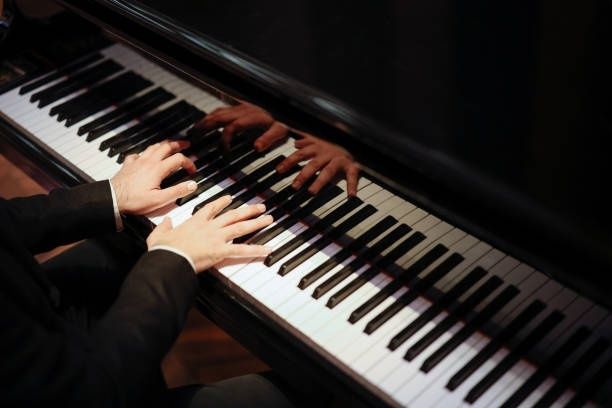
The crucial variable is often interpretation. A fast heartbeat can be labeled as proof of impending failure, which adds catastrophic thought to an already activated body. The same heartbeat can be understood as the body mobilizing for a demanding act. This is not a matter of pretending to feel calm. It is a change in appraisal. Empirical measurements demonstrate just how intensely the autonomic system responds under concert conditions: in peer-reviewed research on musician physiology, Moreno-Gutiérrez and colleagues (2023) tracked classical pianists performing complex Scriabin repertoire and documented pronounced autonomic activation, including acute increases in heart rate, elevated arterial blood pressure, and marked shifts toward sympathetic dominance coupled with depressed baroreceptor sensitivity. Recognizing these cardiovascular reactions as expected physiological mobilization rather than imminent failure allows performers to approach the surge with somatic awareness and cognitive reframing, offering a grounded alternative to treating every bodily sensation as an emergency.
| Body signal | Unhelpful interpretation | More functional reading |
|---|---|---|
| Rapid heartbeat | “I am losing control.” | “My system is mobilizing energy.” |
| Hand tremor | “My technique has disappeared.” | “Fine motor control needs warmth, release, and pacing.” |
| Shallow breathing | “I cannot get enough air.” | “My exhalation needs to become slower and more complete.” |
| Narrowed attention | “I am trapped inside the mistake.” | “I can redirect attention toward sound, phrasing, and contact.” |
Beta-blockers can reduce some physical symptoms for certain performers, but they are not a universal solution and should never be treated as casual performance accessories. They require qualified medical guidance because interactions and individual risks vary. A 2025 doctoral essay on beta blockers in string pedagogy notes that these drugs may soften bodily symptoms without addressing the psychological causes of anxiety. In some cases, dampening heart rate and tremor may also alter the sensation of immediacy that supports nuanced attack, dynamic contrast, and emotional delivery. Medication decisions belong with a clinician, while sustainable performance development usually requires a broader program involving preparation, cognitive strategies, mindfulness, and technical refinement.
Somatic Rerouting in the Green Room
Effective backstage regulation is not an attempt to become inert. The aim is a lower, steadier baseline from which alertness can remain available. Coherent breathing is a practical starting point: allow the inhale to arrive without force, then lengthen the exhale slightly. Several unhurried cycles can interrupt hyperventilation and reduce the impulse to gasp. The technique should remain comfortable. Aggressive breath holding or exaggerated inhalation can intensify dizziness and tension, particularly immediately before singing or playing.
Grounding works best when it is specific enough to occupy the sensory system. Feel both feet inside the shoes, notice the pressure of the floor, release the jaw, and identify the weight of the instrument or the contact of the hands with the case, keys, stick, or bow. A familiar tactile ritual can become an anchor rather than a superstition. A particular warm-up sequence, a quiet walk, visualization, a cup of tea, or a final check of the score can signal readiness. Rituals are most robust when they support preparation without becoming conditions that must be perfectly fulfilled.
- Begin with an honest scan of the body, naming sensations without judging them as good or bad.
- Use five to eight comfortable breaths, giving the exhale enough time to soften the ribs, shoulders, and hands.
- Perform a compact physical warm-up that matches the instrument, concentrating on release, contact, and ease rather than speed.
- Choose one musical intention, such as a vocal line, a rhythmic edge, or a spacious opening phrase, instead of rehearsing every possible failure.
- Step toward the stage while keeping attention on the first sound and the physical action that creates it.
This routine should be rehearsed on ordinary days, not introduced for the first time at a major premiere. Repetition teaches the nervous system that activation can coexist with control. It also protects the performer from the backstage habits that amplify threat, including frantic last-minute practice, doom-scrolling, excessive caffeine, or conversations that turn every detail into a warning. The strongest green-room ritual is flexible enough to survive travel delays, altered acoustics, a missing accessory, or an unexpected change in the running order.
Bridging Neurological Charge and Artistic Presence
The transition from threat perception to artistic immersion begins with the question placed in front of attention. “Will I fail?” contracts the field around self-monitoring. “What does this phrase need?” directs attention toward sound, timing, color, gesture, and communication. Curiosity is especially useful because it does not demand instant confidence. It gives the performer something concrete to investigate: the resistance of the key, the resonance of the hall, the weight of a downbeat, or the way a line travels toward the audience.
Flow is not simply relaxation with a glamorous name. It is an intense form of absorption in which challenge, skill, attention, and action become closely aligned. Movement can help establish that alignment. A conductor”s preparatory gesture, a drummer”s weight transfer, a singer”s grounded breath, or a violinist”s coordinated bow arm gives arousal a visible pathway. Research on embodied performance is beginning to examine these states in conditions closer to actual artistic work. In one collaboration, Elon”s Dance Science Program and Virginia Tech”s Embodied Brain Lab used mobile EEG while dancers worked with learned choreography and improvisation, rather than studying creativity only in stationary laboratory tasks. The project is described in Elon dancers blend art and science for neuroscience study, concert on SURF Day, which also explored breathing, meditation, yoga, warm-ups, and positive self-talk as possible conditions for flow.
- Convert pulse into pulse. Let increased energy sharpen rhythmic definition instead of accelerating the tempo unintentionally.
- Convert tension into articulation. Release unnecessary muscular effort while allowing the attack to carry deliberate character.
- Convert narrowed attention into listening. Track the relationship between your sound, the ensemble, the room, and the audience.
- Convert self-consciousness into intention. Give each section a communicative purpose that extends beyond technical survival.
- Convert unpredictability into responsiveness. Treat small acoustic or ensemble changes as information that can enrich interpretation.
When this rerouting succeeds, arousal becomes audible. It can produce a cleaner attack, a more elastic phrase, a stronger dramatic contour, and a sense that the performance is happening now rather than being reproduced from a rehearsal. The danger is not energy itself, but energy without a channel. Technique supplies the channel; intention supplies the direction; listening keeps the result alive. That combination allows a performer to remain precise without sanding away the risk that makes live music magnetic.
Stepping Into the Light with Unshakable Command
The performance surge deserves a more generous place in a musician”s working vocabulary. It is neither automatic evidence of illness nor a badge of artistic seriousness. It is a high-voltage response to significance, evaluation, uncertainty, and connection. With practice, the performer can learn to notice its first signals, interrupt catastrophic interpretation, and direct the resulting energy toward the work. That process does not promise permanently calm performances. It builds something more valuable: reliable access to choice while the body is activated.
At the next soundcheck or backstage call, keep the adjustment immediate and small:
- Feel the floor before checking the pulse.
- Lengthen the exhale without forcing the breath.
- Release the jaw, shoulders, and hands while preserving musical readiness.
- Name one sound-based intention for the opening phrase.
- Listen outward as soon as the first note begins.
Over a touring season or a lifetime of recitals, these modest actions accumulate into somatic literacy. They support longevity because they distinguish expressive effort from wasteful tension. They protect spontaneity because the performer is no longer dependent on perfect conditions. Most importantly, they return the surge to its proper role in music making: not a barrier standing between artist and audience, but a charged current that can carry phrasing, risk, and presence into the room.