
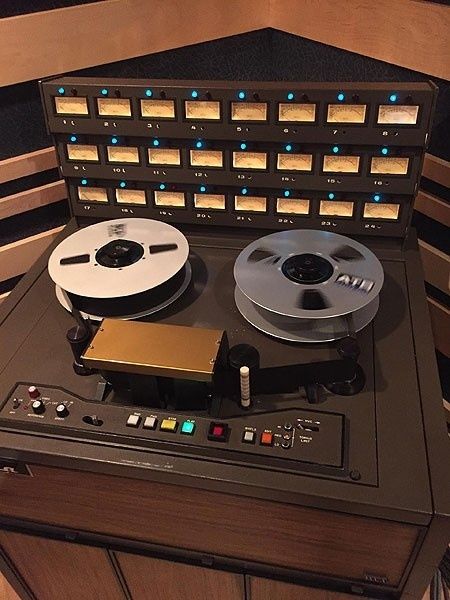
The Ghost in the Clean Digital Machine
Modern digital audio is astonishingly clean. A contemporary DAW can capture a performance with immense dynamic range, recall every edit instantly, and reproduce a mix without the mechanical drift that once defined a tape room. Yet the same pristine sessions are routinely loaded with tape emulations. Engineers place them across vocal channels, drum buses, synthesizers, and mix buses, often before the arrangement is even complete. The contradiction is revealing: technical transparency is not always the same as musical satisfaction.
That satisfaction is often described as “warmth,” a word that can suggest nostalgia, expensive hardware, or the glow of a particular era in recorded music. The more useful explanation is physical. Tape warmth comes from magnetic hysteresis, frequency-dependent saturation, head and tape interaction, biasing, compression, and carefully managed imperfections. A well-designed plug-in is not adding a vague vintage mood. It is attempting to reproduce a chain of measurable behaviors that shaped countless records.
The journey begins with a thin plastic ribbon coated in magnetic particles. From there, it moves through the alignment of microscopic domains, the high-frequency bias signal that makes recording predictable, and the nonlinear response that rounds peaks rather than simply rejecting them. The final stage is psychoacoustic. Human listeners often respond favorably to harmonic density, gentle transients, and low-frequency contouring. Magnetic tape remains part of the foundational sonic grammar of modern production because its limitations became a remarkably effective musical language.
Ribbons of Rust and the Dance of Magnetic Domains
Recording tape is a carefully engineered composite rather than a mystical artifact. A polyester backing supports a plastic binder containing extremely small magnetic particles. Historically, iron oxide was the dominant material, which gives tape its evocative description as a “ribbon of rust.” Chrome oxide and metal formulations were later developed to improve sensitivity, signal-to-noise performance, and usable dynamic range. According to the technical overview from Georgia State University”s HyperPhysics, oxide particles can be approximately 0.5 micrometers in size, while the polyester backing may be as thin as 0.5 mil, or roughly 0.01 millimeters.
Those particles do not travel around the tape in response to the music. They remain embedded in the binder while their magnetic domains are reoriented by the field generated at the record head. An electrical signal from a microphone or console drives the head”s magnetic field, and the moving tape carries a changing magnetic pattern along its track. During playback, the read head converts that changing magnetic field back into an electrical signal through electromagnetic induction. The process is analog because the continuously varying magnetic pattern corresponds to the continuously varying audio waveform.
Music alone, however, is not enough to produce a faithful magnetic image. Tape has magnetic memory, and its response depends on what was recorded immediately before. A high-frequency AC bias, commonly in the region of 40 to 150 kHz, continually “stirs” the magnetic material and establishes more consistent starting conditions for the audio signal. The bias does not become an audible musical layer. Instead, it helps the tape respond proportionally to the intended waveform, overcoming the material”s initial reluctance and reducing the unpredictability caused by hysteresis and thermal variation.
| Physical element | Production consequence |
|---|---|
| Polyester backing | Provides a stable, flexible carrier for the magnetic coating |
| Iron oxide, chrome, or metal particles | Determines sensitivity, noise performance, and available headroom |
| Record and playback heads | Translate electrical energy into magnetic patterns and back again |
| AC bias | Improves linearity and makes the recording response more predictable |
| Tape speed and formulation | Influence bandwidth, noise floor, transient behavior, and saturation character |
Hysteresis and the Physics of Musical Saturation
Hysteresis is the central reason tape does not behave like a perfect wire. In a linear system, an increase in input creates a directly proportional increase in output. Magnetic tape retains part of its previous magnetization, so the output depends not only on the present signal but also on the material”s recent history. The familiar hysteresis loop describes this relationship. It is a record of magnetic memory, and in audio production that memory becomes a form of program-dependent saturation.
As a signal approaches the tape”s practical magnetic limits, the response bends gradually. Peaks are compressed, transients become denser, and the waveform acquires additional harmonics. Digital clipping at 0 dBFS, by contrast, imposes an absolute numerical ceiling. Once an overshoot is truncated, the waveform can develop abrupt corners and high-order distortion products. Tape does not magically prevent overload, and badly driven tape can sound congested or damaged, but its approach to saturation is often more forgiving and musically integrated.
- Low-order harmonics can reinforce the fundamental and make a source feel larger.
- Even-order components may add thickness and a sense of tonal fullness.
- Odd-order components can sharpen definition and increase apparent edge when kept under control.
- Level-dependent compression can make peaks sit closer to the body of a performance.
The result is not simply “less dynamic range.” Tape acts more like an organic, program-dependent dynamic equalizer. Loud passages may lose some high-frequency energy as the magnetic coating approaches saturation, while quieter details remain comparatively open. Bass-heavy material can drive the system differently from a sparse vocal or acoustic guitar. Bias, tape speed, formulation, head alignment, and operating level all change the curve. That is why two machines labeled with the same nominal tape speed can produce noticeably different records, and why calibration remains central to serious tape work.
Psychoacoustics and Why the Human Ear Craves Tape Imperfection
The appeal of tape is partly physical and partly perceptual. One of the most discussed characteristics is the head bump, a low-frequency contour associated with the record and playback head geometry, tape speed, and machine design. It is not a universal fixed bass boost, but a resonant behavior that can add weight and tactile focus in the low end. At 15 inches per second, the effect tends to occupy a different region than it does at 30 inches per second. Used carefully, it can make kick drums, bass instruments, and room microphones feel more connected to the track rather than merely louder.
At the opposite end of the spectrum, tape saturation can gently compress high-frequency transients. That softening is different from cutting a narrow band with an equalizer. Sibilance, pick attack, cymbal spikes, and aggressive synthesizer edges are reshaped as part of the nonlinear process, while the broader harmonic structure remains intact. The effect can be particularly valuable in a digital mix where converters, bright virtual instruments, and densely layered arrangements create a brittle upper register.
Wow, flutter, modulation noise, and tape hiss are less obviously desirable, but small amounts can alter the perceived space around a recording. Hiss provides a continuous low-level floor, while subtle modulation can keep sustained tones from feeling perfectly frozen. In that limited sense, these artifacts resemble natural dither: they do not add detail that was absent from the source, but they can reduce the stark impression of absolute silence and quantized stillness. Excessive noise or pitch instability remains a defect, especially in restoration, mastering, and precision classical recording.
- Listen first for tonal contour, especially low-frequency weight and softened upper transients.
- Separate harmonic saturation from noise and modulation effects, since they serve different musical purposes.
- Match perceived loudness before judging whether a tape process sounds better.
- Use the smallest amount that changes the relationship between elements in the arrangement.
The biological case should also be stated carefully. Human hearing did not evolve to prefer tape machines specifically, and “analog” is not a synonym for accuracy. Digital recording is generally the more transparent medium. What listeners often enjoy is harmonic density that creates familiar relationships between tones, plus dynamic rounding that makes musical events feel less abrupt. A clean recording can be truthful, but truth without contour can feel exposed. Tape”s imperfection supplies contour, and that contour can translate as intimacy, size, or emotional weight.
Bridging the Tape Head into the In-The-Box Workflow
Modern producers can approach tape behavior at several levels. Component-level physical modeling may recreate bias interaction, hysteresis, head bumps, tape formulations, repro and sync paths, wow and flutter, and level calibration. Other processors offer a compact saturation stage with fewer controls. Hardware outboard rigs provide genuine tape transport, electronics, alignment demands, and maintenance, while software provides recall, repeatability, and access to multiple machine voices within a single session. For practical comparisons of current tools, this tape emulation guide surveys options ranging from detailed multitrack machines to cassette and lo-fi processors.

The production decision is therefore less about proving whether hardware or software is superior and more about identifying which behavior serves the arrangement. A tape machine can impose useful discipline through limited tracks, destructive edits, synchronization challenges, and the need to commit decisions. Digital systems remove those obstacles, but they can also encourage endless playlist layers, alternate takes, and unexamined processing. Tape principles can restore focus without requiring a full analog facility.
- Tracking: Apply restrained saturation to vocals, bass, guitars, or synths to establish density before the mix expands.
- Drum buses: Use compression and harmonic rounding to make close microphones and overheads feel like one performance.
- Mix buses: Choose a calibrated, subtle process that shapes peaks rather than announcing an obvious effect.
- Mastering and print stages: Favor headroom, accurate monitoring, and conservative settings, since broad tonal changes are difficult to hide later.
The strongest results usually come from treating tape as an arrangement tool. Commit a sound when the saturation makes the part sit better, not merely because the plug-in sounds impressive in isolation. Compare processed and unprocessed signals at equal loudness, check mono compatibility, and listen at low volume. If the vocal becomes more intelligible, the bass occupies its lane more confidently, or the drum bus gains continuity without losing impact, the physics is doing useful editorial work inside the mix.
Reclaiming Harmonic Texture in a High Resolution Age
Analog warmth is measurable acoustic behavior, not mythical magic. Magnetic domains retain history. AC bias improves the consistency of their response. Hysteresis bends the transfer curve, and saturation generates harmonic overtones while compressing peaks in a level-dependent way. Head geometry contributes frequency contouring, and the transport adds carefully identifiable forms of noise and modulation. These details explain why tape can sound rounded, dense, tactile, or cohesive even when the source and destination are both judged by modern standards of fidelity.
For contemporary engineers, the most productive mindset is neither analog worship nor digital defensiveness. Digital provides the clean canvas, precise editing, stable recall, and broad dynamic capability that modern production depends on. Tape principles offer an artistic brush: a way to shape transients, organize density, and introduce harmonic relationships that the ear may read as more connected. Use those nonlinearities deliberately, at the stage where they solve a musical problem, and tape stops being a technical crutch. It becomes what it has always been at its best, a disciplined method for turning physical limitation into emotional resonance.