
Breaking Free from the Anglo-American Blues Grid
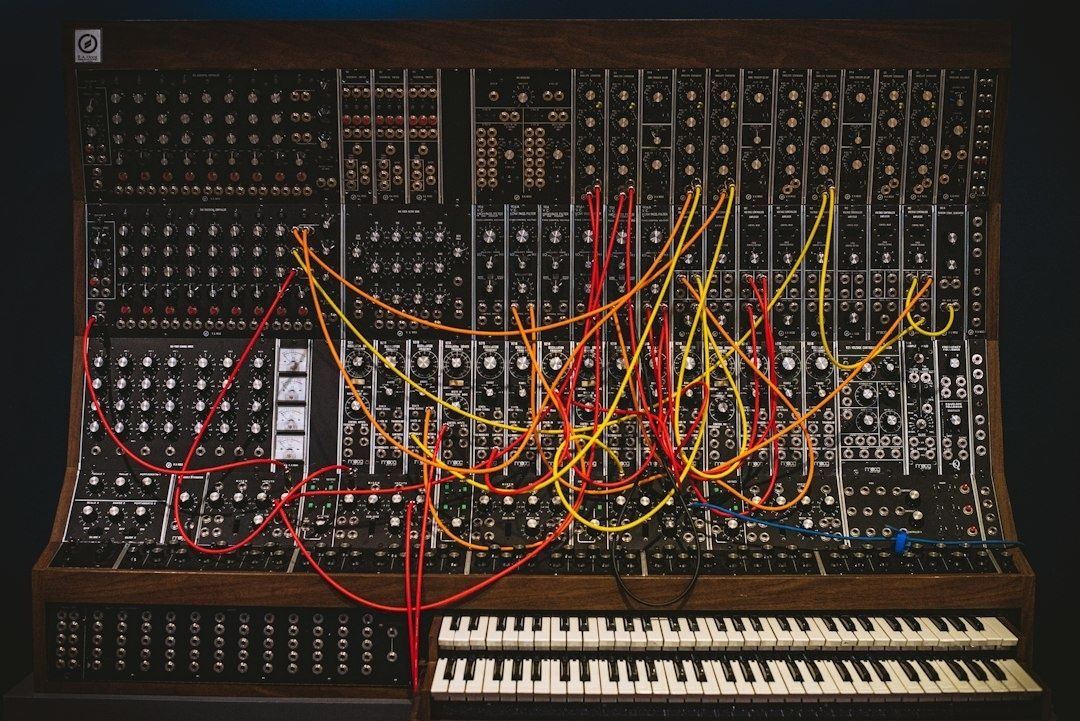
In post-war West Germany, rock music arrived carrying a cultural history that many young musicians did not wish to inherit intact. The blues-based structures of British and American rock were powerful, but they were also associated with an Anglo-American mythology of rebellion, virtuoso individualism, and familiar emotional codes. A new generation in Düsseldorf, Cologne, Hamburg, and Berlin wanted a sound that belonged to the fractured modernity around them. The result was not a single genre so much as a shared refusal, an experimental field where amplified instruments, tape technology, repetition, and studio architecture could replace inherited rock mannerisms. Krautrock”s wider musical landscape makes sense precisely because it treated rock as raw material rather than a fixed language.
That refusal was clearest in rhythm. Instead of leaning on the 12-bar blues, shuffle, backbeat swagger, or syncopated swing, musicians began to pursue a straighter, more relentless motion. The beat did not necessarily tell a story through accents and fills. It established a plane, a pulse that could continue beyond the limits of conventional song form. Motorik, a term associated with this sensation of metronomic forward travel, became an avant-garde manifesto disguised as a drum pattern. Its radical gesture was simple: repetition could be expansive, and restraint could generate intensity.
The Anatomy of Klaus Dinger’s Endless Horizon
Klaus Dinger”s drumming with Neu! remains the clearest physical statement of the Motorik ideal. On tracks such as “Hallogallo,” “Negativland,” and “Für Immer,” the beat seems to advance without conventional destination. Dinger”s snare lands with a distinctive, dry “dap,” often described as almost mechanical, yet the performance is not emotionally vacant. The force comes from the tension between exact recurrence and bodily effort. Each strike is a confirmation that the track is still moving, while the nearly unchanged pattern turns time itself into the main subject.
The German phrase lange gerade, meaning “long straight,” captures the philosophy better than the genre label alone. Dinger”s rhythm does not imitate an actual automobile engine, but it shares the psychological experience of the Autobahn: speed without scenic interruption, direction without narrative detour, and a horizon that appears to extend indefinitely. Michael Rother”s guitar supplies shifting color and harmonic atmosphere around the beat, while the drums hold the track to its central axis. The result is music that can feel euphoric, alienated, meditative, or all three at once.
The Dinger beat is best understood through its core components:
- Unbroken 4/4 continuity, with the kick and snare maintaining a stable grid rather than announcing dramatic sectional changes.
- A firm second and fourth beat, where the snare”s “dap” creates propulsion without the looseness of a blues-rock backbeat.
- Minimal ornamentation, since fills, crashes, and expressive flourishes are held back to preserve the sensation of uninterrupted travel.
- Forward pressure through repetition, allowing texture, volume, and guitar movement to create development while the drum pattern remains nearly constant.
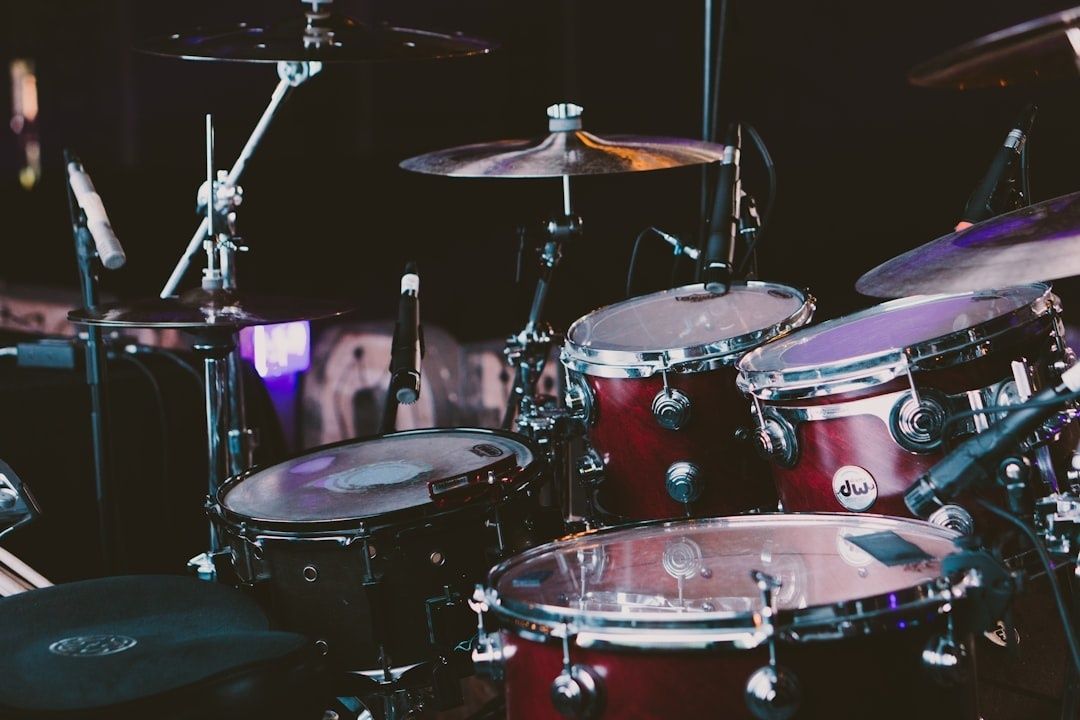
This is why Neu! still rewards close listening on both original pressings and carefully mastered reissues. The apparent simplicity exposes production decisions that busier rock arrangements often conceal: the placement of the snare, the relationship between dry percussion and spacious guitar, and the point at which a repeated figure begins to alter the listener”s perception of time. Motorik is not merely a beat to copy. It is a method for making small changes feel monumental.
Jaki Liebezeit and the Human Metronome of Can
Jaki Liebezeit approached rhythm from a different angle. His background in jazz gave him a sophisticated command of interaction, but his work with Can often sounded like a deliberate retreat from conventional jazz display. Rather than treating the drum kit as a platform for continuous commentary, Liebezeit reduced it to a finely calibrated system. The restraint was severe, yet it never became lifeless. His playing on records such as Tago Mago, Ege Bamyasi, and Future Days demonstrates how a human drummer can create the stability associated with machinery while retaining microscopic fluctuations in touch, pressure, and placement.
Liebezeit”s groove is not a static loop in the modern sequencer sense. It is a living structure whose surface remains controlled while its internal dynamics shift. A hi-hat may tighten or open by degrees; a kick may acquire more weight without moving from its position; a snare can sit fractionally behind the pulse and then return to a firmer center. These details are easy to miss when heard casually, but they are central to Can”s hypnotic power. The music feels repetitive because its architecture is stable, yet it continues to breathe because the drummer is constantly managing micro-groove tension.
| Liebezeit”s functional minimalism | Standard blues-rock drum formulas |
|---|---|
| Prioritizes continuity and long-form concentration | Often emphasizes sectional contrast and expressive fills |
| Uses small changes in touch and dynamics as development | Uses accents, crashes, and drum breaks to mark transitions |
| Locks with bass and repeated figures as an integrated system | Typically supports guitar riffs and vocal phrasing through a looser backbeat |
| Maintains tension through restraint and marginal displacement | Generates energy through swing, syncopation, and overt attack |
| Allows extended grooves to become the form itself | Usually serves a verse, chorus, bridge, or solo-based structure |
The distinction matters for producers and collectors because Can”s recordings reveal how much “human” detail can survive inside an apparently mechanical framework. Liebezeit was not attempting to erase the drummer. He was redefining the drummer”s role as a regulator of energy. That approach later became fundamental to electronic music, where a producer might preserve a rigid grid but introduce life through velocity, filtering, timing offsets, and gradual density changes. The machine does not replace the drummer”s intelligence; it makes the drummer”s decisions easier to isolate.
Industrial Tape Loops and the Disruptive Sound of Faust
Faust pushed the German rhythmic project into a more unstable zone. Where Neu! sought the horizon and Can refined the groove, Faust treated rhythm as an assemblage of fragments, interruptions, tape edits, found sound, and instrumental collisions. Their early work emerged from a commune near Hamburg, where improvisation and homemade technology were as important as conventional songwriting. The band”s black boxes, unusual effects, and willingness to incorporate machinery into performance created a sound that could feel less like a rock group than a temporary industrial installation.
Uwe Nettelbeck”s production direction and engineer Kurt Graupner”s technical work helped transform Werner Diermaier”s drums into something architectural. Percussion could be isolated, repeated, distorted, or placed against unrelated noise until it functioned as concrete rather than accompaniment. On Faust IV, recorded at The Manor in 1973 after Virgin Records signed the group, the improved facilities brought a surprising degree of clarity and accessibility. That polish created a productive contradiction. The album could suggest reggae, ambient music, industrial rock, post-punk, and electronic pop while retaining Faust”s taste for dislocation. Its commercial failure and divided reception reflected the difficulty of presenting experimental music to an audience trained to expect either raw chaos or conventional songs.
The story of Faust IV also shows how a record can be historically important without becoming an immediate success. The inexpensive Faust Tapes had reached roughly 60,000 British buyers at 49 pence, establishing an expectation of wild, unfinished experimentation. By comparison, the later album sounded to some listeners like a retreat, even though its construction was exceptionally inventive. The record”s delayed recognition confirms a recurring pattern in avant-garde catalogues: accessibility can obscure innovation at first, especially when listeners have mistaken difficulty for authenticity.
How the German Pulse Built Post-Punk and Modern Electronic Music
The route from Düsseldorf to later rhythm culture is not a simple chain of direct imitation, but the influence is unmistakable. David Bowie and Brian Eno absorbed the atmosphere, production methods, and disciplined repetition of the German scene during the Berlin period. The influence of Düsseldorf”s electronic minimalism and the streamlined propulsion associated with Neu! and La Düsseldorf can be heard around the edges of Low and “Heroes”. Bowie”s Berlin trilogy did not reproduce Motorik mechanically. It translated the pulse into an art-pop environment where synthesizers, processed drums, fractured vocals, and spacious mixes could occupy equal importance.
Post-punk found an especially fertile use for the same principles. Joy Division”s rhythms, although darker and more dramatically arranged, often rely on an unyielding sense of forward motion. The bass becomes a melodic engine, the guitar a field of metallic repetition, and the drums a disciplined frame for emotional pressure. Later groups, including The Fall, Stereolab, and numerous industrial and minimal-wave acts, recognized that a straight rhythm could carry ambiguity. It could sound functional, anxious, ecstatic, or politically charged depending on the surrounding timbre.
The connection to Detroit techno and Chicago house is equally important. The clubs of the United States developed their own histories, technologies, and Black musical traditions, so Motorik should not be presented as the sole origin of electronic dance music. Its contribution was conceptual and structural: the validation of the extended loop, the refusal of unnecessary ornament, and the understanding that sustained repetition could produce transformation. A four-on-the-floor pattern could become a sonic environment rather than a support mechanism.
- Experimental rock establishes the long pulse. Neu!, Can, and related groups make repetition central to the listening experience rather than subordinate to a verse and chorus.
- Electronic production isolates the grid. Synthesizers, tape manipulation, sequencers, and studio processing separate rhythm from the limitations of a live band.
- Post-punk adds emotional and political tension. The Motorik principle enters darker arrangements, where mechanical continuity reflects alienation, urban pressure, and social unease.
- Club culture extends the loop. Detroit techno and Chicago house turn repeated four-beat structures into communal, physical forms that depend on duration and incremental change.
- Modern production recombines the parts. Contemporary producers use rigid quantization alongside swing, granular edits, side-chain movement, and subtle timing errors to create grooves that are both programmed and tactile.
For today”s listener, this sequence is audible in the relationship between rhythm and arrangement. A kick drum may remain fixed while filters open, harmonics accumulate, and spatial effects redraw the room around it. That is the Motorik lesson carried into the digital era: motion does not require constant rhythmic novelty. Sometimes the most persuasive development occurs when the pulse refuses to move and everything else changes around it.
The Unbroken Pulse Shaping Tomorrow’s Soundscapes
Motorik endures because it is more than a period style. It is an aesthetic philosophy built on concentration, duration, and the productive tension between human touch and mechanical regularity. The pulse can be stripped to a kick, a snare, and a repeated figure, yet the listening experience remains open-ended. Its emotional range comes from context: a bright guitar can make the same pattern feel liberating, while a distorted synthesizer can turn it ominous. The beat is a frame, not a verdict.
For record collectors, producers, and curious listeners, the most rewarding approach is to hear Krautrock not as a nostalgic 1970s archive but as a set of working principles. Listen for how Dinger turns restraint into acceleration, how Liebezeit finds microscopic life inside discipline, and how Faust makes rhythm from debris. Then follow those decisions into post-punk, techno, house, industrial music, and contemporary experimental production. The invitation is simple: return to the pulse, stay with the repetition, and hear how much tomorrow”s soundscape can still be built from an apparently unchanging beat.